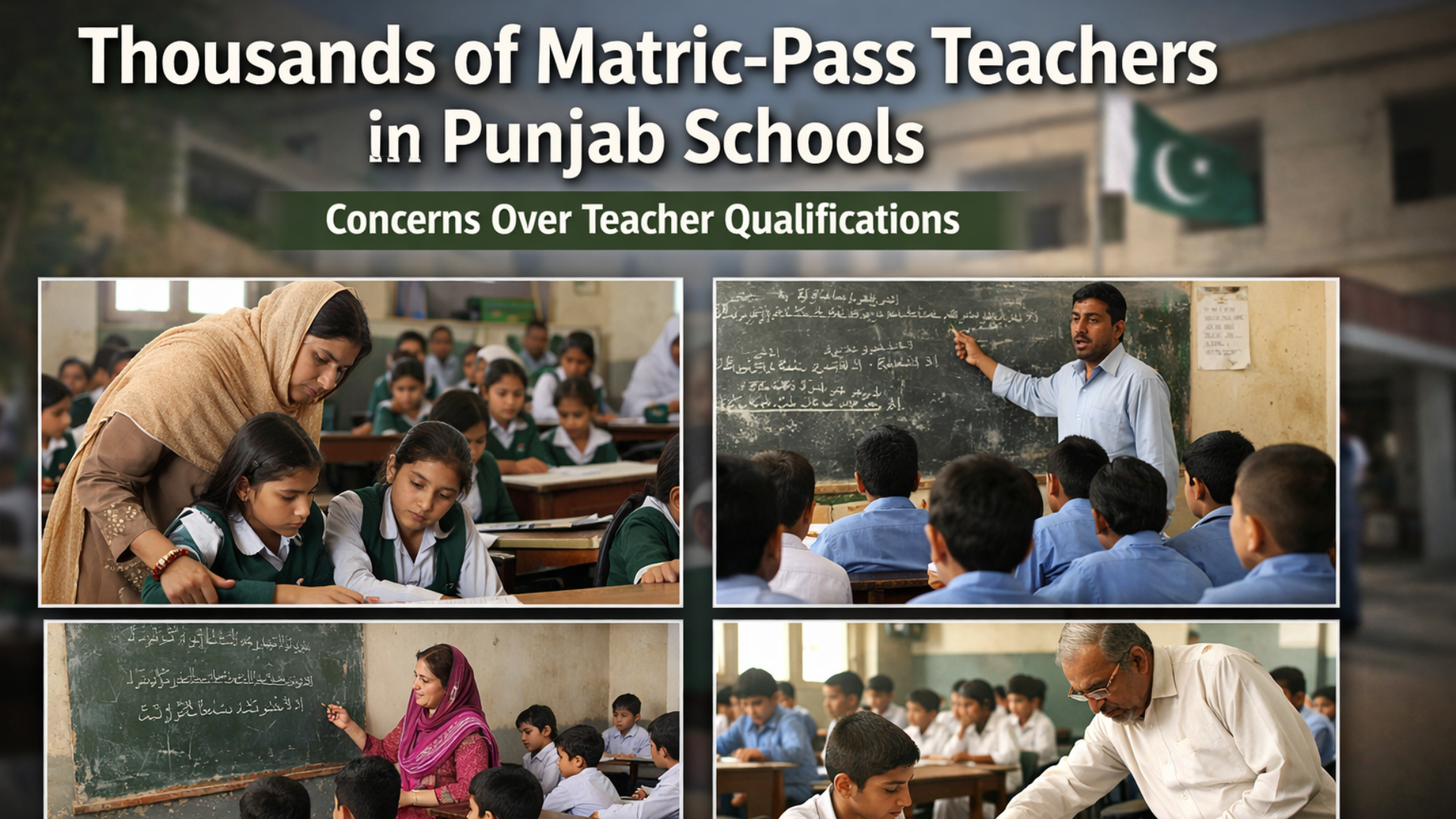

Thousands of Matric-Pass Teachers Continue Teaching. Thousands of teachers working in Punjab’s government schools hold only a matriculation qualification, raising serious concerns about education quality and long-term learning outcomes across the province.
According to the latest official data released by the School Education Department, more than 14,000 teachers currently teaching in public schools have completed only matric. The figures have sparked debate among education experts, policymakers, and parents.
Punjab Teachers Qualification Breakdown Revealed
The newly compiled statistics provide a detailed picture of the academic background of teachers serving in Punjab’s public education system.
Key highlights from the data include:
- 14,000+ teachers have only matric-level education
- 9,000+ teachers hold FA or FSc qualifications
- 62,000 teachers possess BA or BSE degrees
- Over 200,000 teachers are serving with master’s degrees
- 40,000 teachers have completed MPhil
- 752 teachers hold PhD degrees
In terms of gender distribution, 60% of teachers are male, while 40% are female.

Why Are Matric-Pass Teachers Still in Classrooms?
Education officials explained that many of these teachers were hired under older recruitment policies, when minimum qualification requirements were lower. At the time, teacher shortages forced the government to prioritize availability over academic credentials.
However, critics argue that continuing with such arrangements in 2026 reflects policy stagnation and weak enforcement of professional standards.
Education Experts Raise Serious Concerns
Education specialists warn that teachers with low academic qualifications may struggle with:

- Modern teaching methods
- Updated curricula
- Critical thinking instruction
- Student assessment and learning outcomes
Experts stress that teacher quality directly impacts student performance, especially at the primary and middle school levels where foundational learning is built.
Many believe that without urgent reforms, Punjab risks widening learning gaps, especially in rural and underdeveloped districts.
Purpose of Data Collection Explained
The School Education Department clarified that the data was collected to:

- Support policy formulation
- Identify training gaps
- Improve teacher professional development
- Strengthen education standards across Punjab
Officials stated that the findings will help design targeted training programs, upskilling initiatives, and future recruitment reforms.
Calls for Teacher Training and Requalification
Rather than immediate dismissals, education analysts recommend:
- Mandatory in-service training programs
- Gradual requalification pathways
- Distance learning and certification options
- Performance-based assessments
They argue that structured professional development can improve classroom outcomes while protecting teachers’ livelihoods.

Public Reaction and Policy Debate
Parents and civil society groups have reacted strongly to the figures, calling for:
- Higher minimum qualifications for new teachers
- Transparent hiring practices
- Regular audits of teacher credentials
- Stronger accountability mechanisms
The issue has also reignited debate in policy circles about balancing teacher shortages with education quality.
Way Forward for Punjab’s Education System
Education reform experts agree that improving learning outcomes requires:

- Raising teacher qualification standards
- Investing in continuous professional development
- Aligning recruitment policies with modern education needs
- Monitoring classroom performance regularly
They emphasize that data-driven decision-making, combined with political will, is essential for long-term reform.
Conclusion
The presence of thousands of matric-pass teachers in Punjab’s public schools highlights a deep structural challenge in the education system. While the government’s decision to compile and release this data is a positive step, experts stress that action must follow transparency.
Without meaningful reforms, Punjab risks compromising the academic future of millions of students. Strengthening teacher qualifications, training, and accountability remains critical to improving education standards across the province.