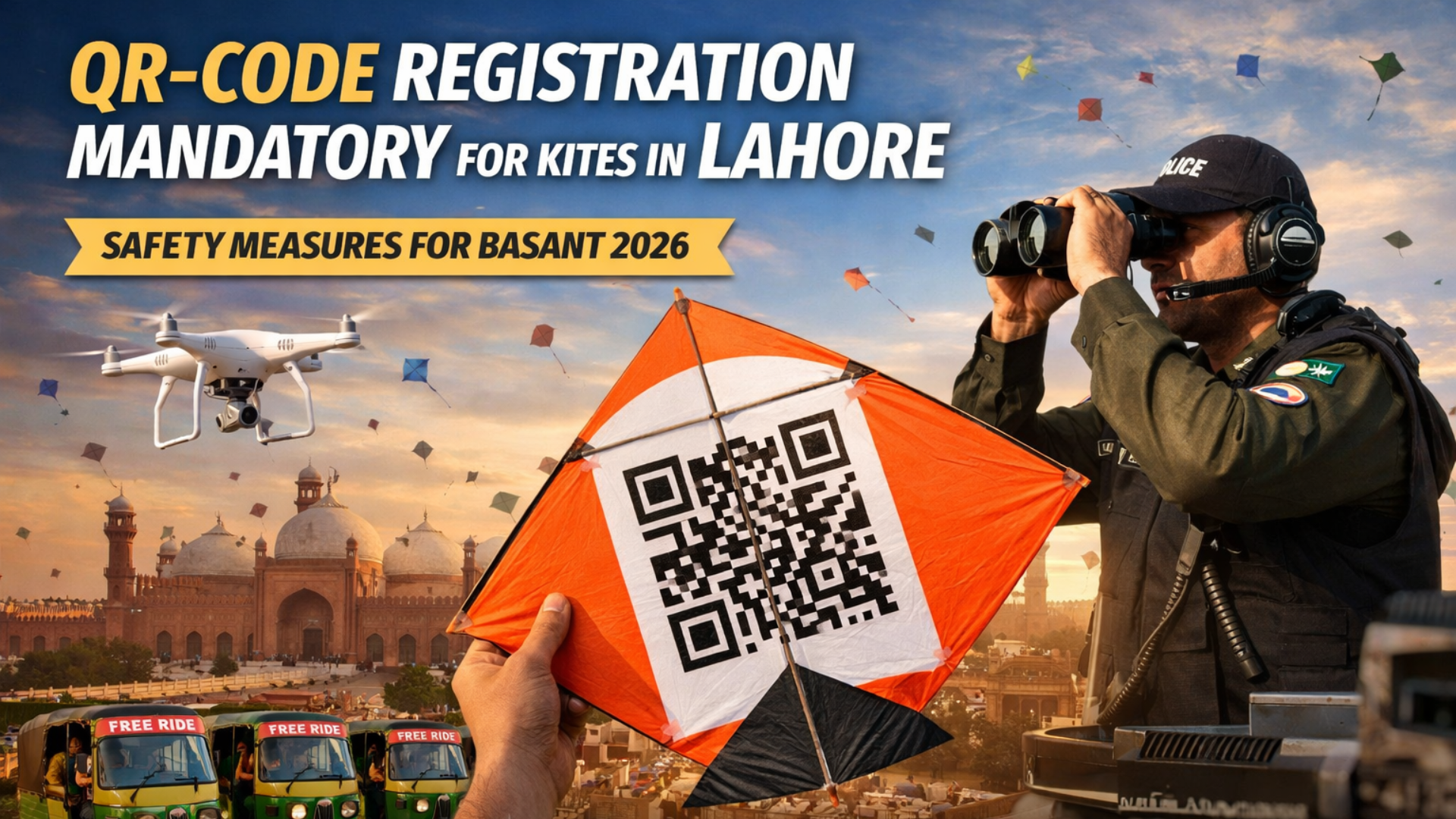

QR-Code Registration Made Mandatory for Kites. The Punjab government has introduced strict new rules for Basant 2026 in Lahore, making QR-code registration mandatory for all kites and strings. The move is part of a comprehensive security plan aimed at reducing accidents, enforcing the law, and ensuring public safety during the annual kite-flying season.
Authorities say the decision comes after years of safety concerns linked to illegal kite materials, rooftop violations, and fatal accidents involving motorcyclists and pedestrians. With Basant celebrations expected to draw large crowds, officials are taking a zero-tolerance approach this year.
Why QR-Code Registration for Kites Is Now Mandatory
Under the new policy, only registered kites and approved cotton strings will be allowed during Basant. Each kite and string will carry a unique QR code, allowing authorities to trace:
- The seller
- The registered user
- The approved material type
This system is designed to eliminate the use of glass-coated, chemical, and metal strings, which have been responsible for serious injuries and deaths in past years.
Officials say QR-code tracking will make enforcement faster and more effective, especially in high-risk areas.
Lahore Divided Into Red, Yellow, and Green Zones
To manage crowd control and safety risks, Lahore authorities have divided the city into three security zones.
Red Zones
These areas are considered high-risk due to dense populations, traffic flow, and past incidents. Kite flying will be heavily restricted, and entry will be limited.

- Protective motorcycle antennas mandatory
- Helmets compulsory
- Strict monitoring by police and drones
Yellow Zones
Moderate-risk areas where kite flying will be allowed under strict supervision.
- Only QR-registered kites permitted
- Increased police presence
- Continuous surveillance
Green Zones
Low-risk residential areas where controlled kite flying may be allowed, provided all safety rules are followed.
Case in the Lahore High Court
The new security measures were presented to the Lahore High Court in response to a petition filed by Advocate Azhar Siddique.
The petition challenged the enforcement and interpretation of the Punjab Kite Flying Act and the government’s notification allowing Basant celebrations under regulated conditions.
Following court directives, Punjab Police were instructed to submit a detailed, evidence-based security plan before granting any approval.
Ten Years of Data Used to Design the Security Plan
According to officials, the Basant 2026 strategy is not guesswork. Police analyzed ten years of accident, crime, and enforcement data related to kite flying.

The review highlighted:
- Fatal throat injuries from metal strings
- Traffic accidents involving motorcyclists
- Rooftop falls
- Aerial firing incidents
- Illegal sale of banned kite materials
Based on these findings, authorities finalized a plan focused on prevention, monitoring, and rapid response.
Strict Enforcement of the Punjab Kite Flying Act
Authorities have confirmed full enforcement of the Punjab Kite Flying Act during Basant 2026.
What Is Allowed
- Registered kites only
- Cotton strings with QR codes
- Flying within permitted time slots
What Is Banned
- Glass-coated strings
- Chemical or metallic strings
- Unregistered kite sales
- Night-time kite flying
Violators may face:
- Heavy fines
- Arrests
- Confiscation of equipment
- Criminal charges
24/7 Surveillance Using Modern Technology
To ensure compliance, police will operate round-the-clock monitoring systems, including:
- Drone surveillance over rooftops and open areas
- Social media monitoring to track illegal sales and events
- Dedicated control rooms coordinating police, rescue, and traffic units
Officials say this integrated approach will allow quick action against violations before they escalate.

Crackdown on Rooftop Drinking and Aerial Firing
The Basant security plan also targets activities often linked with serious incidents.
Authorities will take strict action against:
- Rooftop drinking
- Aerial firing
- Loud music and gatherings without permission
- Unsafe rooftop structures
Police teams will conduct surprise checks, especially in Red and Yellow Zones.
Motorcyclist Safety Measures Announced
Motorcyclists have historically been the most vulnerable during Basant due to sharp strings stretched across roads.
For Basant 2026:
- Helmets are mandatory
- Safety wires or protective antennas required
- Entry into Red Zones without protection will be restricted
Traffic police will enforce these rules strictly, with fines for non-compliance.

5,000 Free Rickshaws to Operate Across Lahore
To reduce traffic congestion and support safe mobility, the Punjab government will operate 5,000 free rickshaws during Basant days.
These rickshaws will:
- Serve high-traffic routes
- Reduce motorcycle usage
- Help citizens move safely between zones
Officials say this step will also support lower-income residents during the festivities.
Emergency Services on High Alert
Multiple departments will remain fully active throughout the Basant period.
On-Duty Services
- Rescue 1122
- Health Department emergency units
- Traffic police
- Local administration teams
Hospitals have been instructed to prepare for emergency cases, while ambulances will be stationed in sensitive areas.
Public Safety Is the Core Objective
Officials emphasize that the goal is not to ban Basant, but to ensure it is celebrated responsibly.

A senior officer stated that the QR-code system and zoning plan aim to:
- Protect lives
- Prevent illegal activities
- Allow families to enjoy Basant safely
Authorities have urged citizens to cooperate and report violations.
What Citizens Should Know Before Basant 2026
If you plan to participate in Basant:
- Buy kites only from registered sellers
- Check for QR codes on kites and strings
- Avoid rooftops without safety barriers
- Follow zone-specific rules
- Do not engage in banned activities
Failure to comply may result in legal action.
Conclusion
The decision to make QR-code registration mandatory for kites in Lahore marks a major shift in how Basant is managed. By combining technology, zoning, strict law enforcement, and public cooperation, authorities aim to strike a balance between tradition and safety.