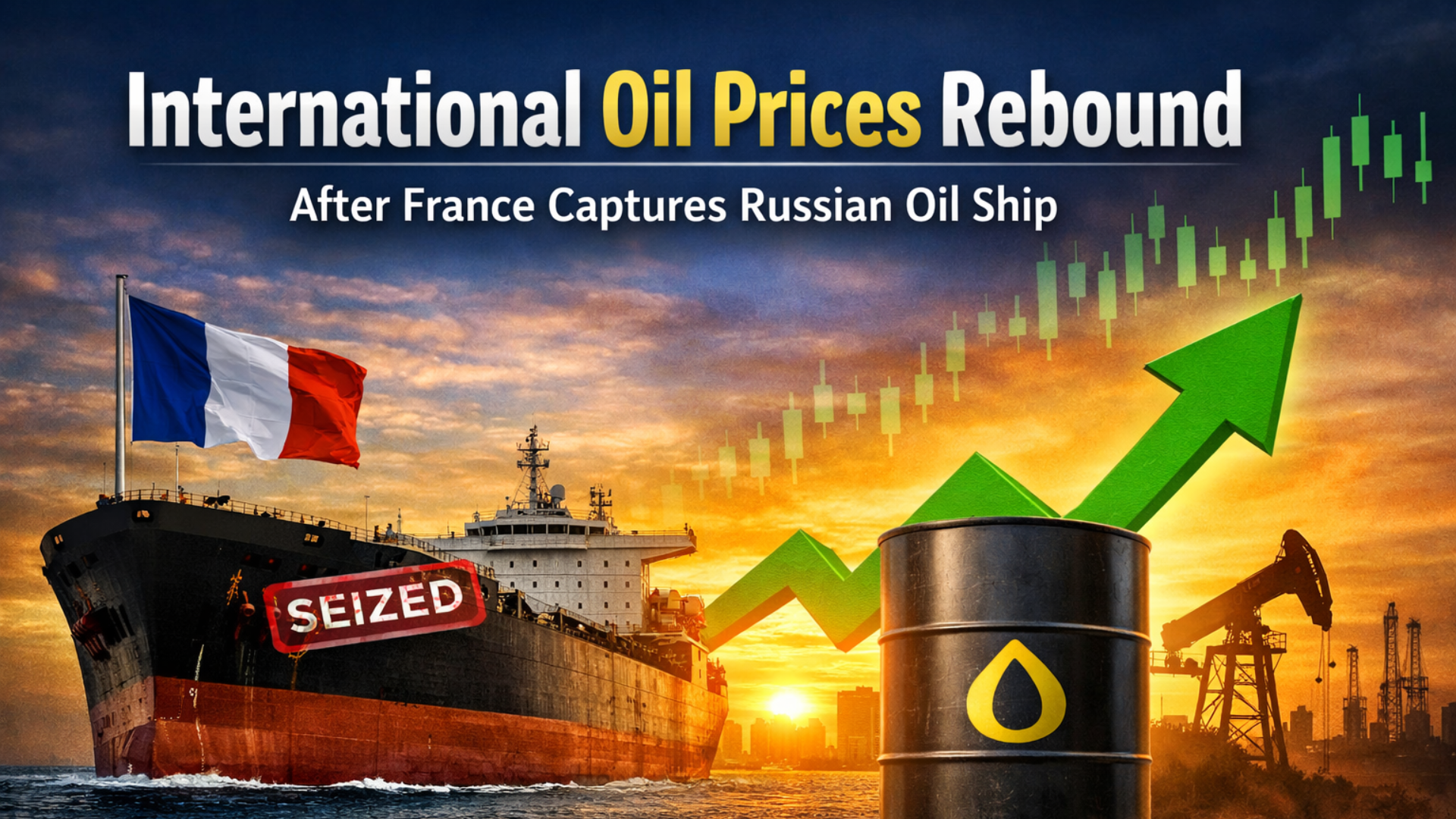

International Oil Prices Rebound After France Captures Russian Oil Ship. International oil prices rebounded sharply on Friday after France intercepted a Russian oil tanker in the Mediterranean Sea, triggering renewed concerns over global crude supply disruptions. The incident added fresh geopolitical risk to energy markets already under pressure from production outages and rising tensions in the Middle East.
Oil markets had been trading cautiously earlier in the week. However, prices surged after reports confirmed that French authorities had seized a tanker transporting Russian crude, raising fears of further interruptions in oil shipments linked to ongoing geopolitical conflicts.
Geopolitical Tensions Push Oil Prices Higher
The capture of the Russian oil vessel intensified market uncertainty surrounding energy supply routes. Analysts say the move by France could escalate tensions with Russia, especially at a time when oil exports remain a sensitive geopolitical issue.
Market participants reacted swiftly, pricing in the possibility of tighter supply conditions if similar actions disrupt crude transportation across major shipping corridors. The Mediterranean Sea is a key transit route for global oil trade, and any disruption in this region can have immediate effects on international prices.

Trump Warning to Iran Adds to Market Anxiety
In addition to the tanker incident, oil prices were supported by renewed warnings from Donald Trump regarding potential disruptions in global crude supplies. Trump cautioned Iran against interfering with international oil flows, signaling possible consequences if supply routes were threatened.
Such statements increased fears of instability in the Middle East, a region responsible for a significant share of the world’s oil production. Traders closely monitor political developments involving Iran, as even verbal escalations can influence crude prices due to the region’s strategic importance.
Kazakhstan Production Outages Add Supply Pressure
Supply concerns were further amplified by reports of production disruptions in Kazakhstan. Temporary outages in the country’s oil output reduced available supply in global markets, contributing to the upward momentum in prices.

Kazakhstan is a major oil producer in Central Asia, and any decline in its production often tightens global supply balances. Combined with geopolitical risks in Europe and the Middle East, these outages created a strong bullish sentiment in energy markets.
Oil Prices Post Strong Daily and Weekly Gains
Crude oil benchmarks posted solid gains during Friday’s trading session.
Brent crude futures for March delivery rose by $1.68, or 2.6 percent, reaching $65.74 per barrel by 7:10 PM PKT. Meanwhile, US West Texas Intermediate (WTI) crude climbed $1.63, or 2.8 percent, trading at $60.99 per barrel.

At the time of reporting, Brent crude was up 2.54 percent, or $1.63, settling at $65.69 per barrel, while WTI gained 2.56 percent, or $1.52, to trade at $60.88 per barrel.
Both benchmarks were on track to record weekly gains exceeding 2 percent, reflecting renewed optimism among traders amid tightening supply expectations.
Market Outlook Remains Volatile
Energy analysts warn that oil markets are likely to remain volatile in the coming weeks. Ongoing geopolitical developments, particularly involving Europe, Russia, Iran, and the United States, could continue to influence price movements.

Any escalation related to shipping routes, sanctions enforcement, or diplomatic tensions may further strain supply chains. At the same time, production issues in key oil-producing countries could add to upward pressure on prices.
Investor Focus Shifts to Global Supply Risks
Investors are increasingly shifting their focus from demand-side concerns to supply-side risks. While global demand growth remains steady, supply uncertainties are now driving price movements.
The seizure of the Russian tanker, combined with political warnings and production outages, highlights how quickly oil markets can react to geopolitical events. Traders are expected to remain cautious, closely monitoring developments that could impact crude availability.

Conclusion
International oil prices rebounded strongly on Friday as markets responded to escalating geopolitical tensions and supply disruptions. The interception of a Russian oil ship by France, renewed warnings involving Iran, and production outages in Kazakhstan collectively fueled fears of tighter global oil supplies.