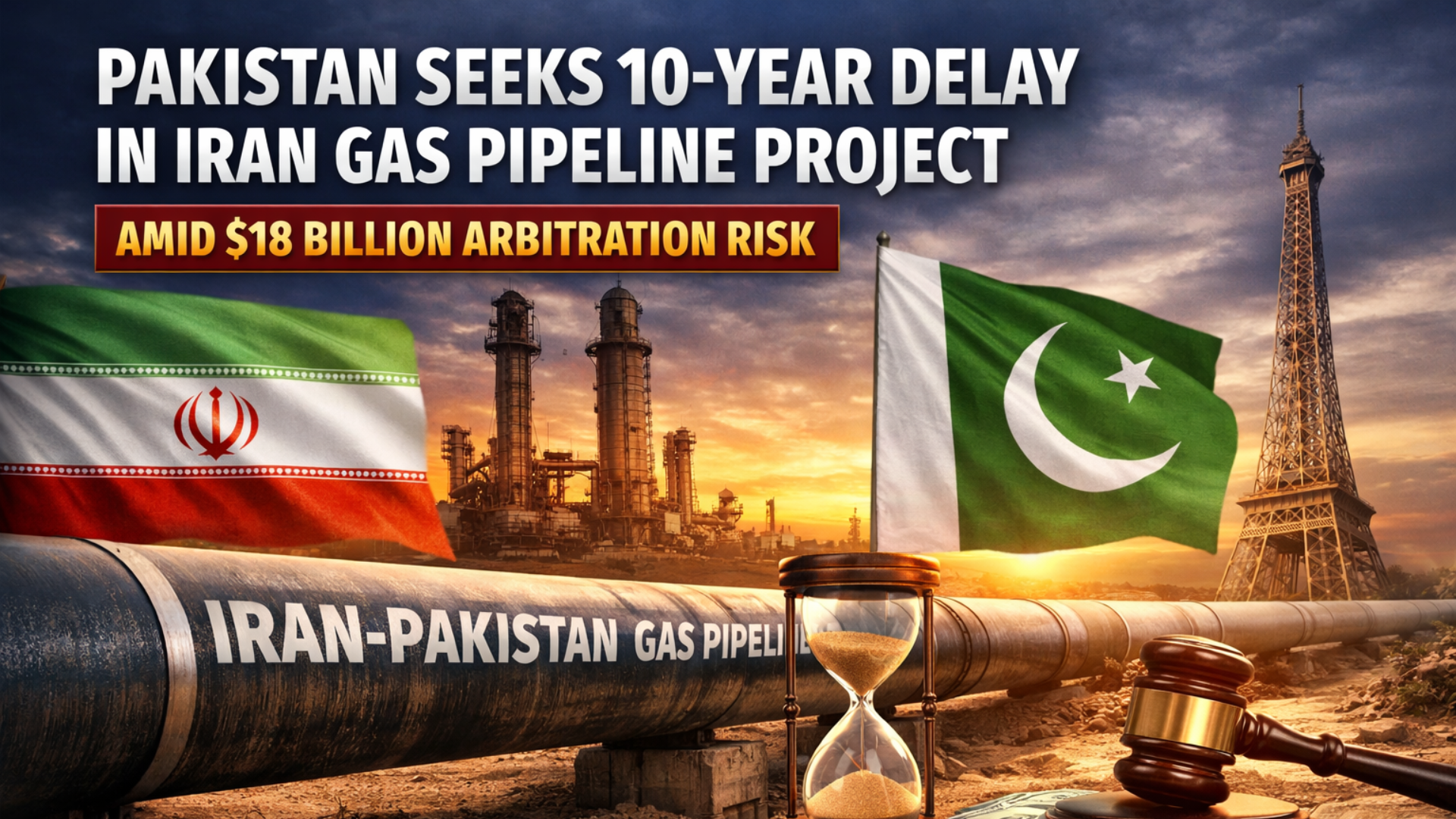

Pakistan Seeks 10-Year Delay in Iran Gas Pipeline Project. Pakistan has formally requested a fresh 10-year extension until 2035 from Iran to begin construction of the long-delayed Iran–Pakistan (IP) gas pipeline, as the country faces a potential $18 billion penalty in international arbitration due to ongoing United States sanctions on Tehran.
The move comes as Islamabad attempts to reduce its legal and financial exposure while navigating a complex mix of international sanctions, diplomatic pressure, and energy security challenges.
Arbitration Case Underway in Paris
Iran initiated international arbitration proceedings in September 2024, accusing Pakistan of failing to construct its portion of the pipeline despite repeated deadline extensions.
The case is being heard by the Court of Arbitration in Paris under French law, as stipulated in the Gas Sales Purchase Agreement (GSPA) signed between the two countries.
Under the agreement, Iran claims Pakistan violated contractual obligations and is now seeking $18 billion in damages, one of the largest energy-related arbitration claims faced by Pakistan.
Why Pakistan Is Seeking a 10-Year Extension
Pakistan’s legal stance is based on one core argument:
international sanctions on Iran made it practically impossible to execute the project.

According to government officials, Pakistan could not proceed with construction even during the final 180-day extension period, as doing so would have exposed the country to secondary sanctions from the United States, potentially harming its economy, banking system, and international trade relationships.
The new request seeks to push the deadline to 2035, allowing Pakistan time to:
- Navigate shifting global sanctions regimes
- Explore alternative diplomatic solutions
- Protect itself from immediate financial penalties
- Keep the pipeline option alive for future energy needs
Ministerial Oversight Committee Reviewing Options
To manage the situation, the federal government has formed a Ministerial Oversight Committee (MoC) led by Deputy Prime Minister Ishaq Dar.
The committee is tasked with reviewing:
- Legal strategies in the arbitration case
- Diplomatic channels for a negotiated settlement
- Financial exposure and risk mitigation
- Long-term implications for Pakistan’s energy policy
According to officials, the MoC is carefully weighing both legal and political consequences before recommending a final course of action.

Parallel Diplomatic Efforts Continue
Alongside the legal battle, Pakistan is actively pursuing out-of-court diplomatic engagement with Iran in an attempt to reach a mutually acceptable settlement.
Government sources indicate that while formal legal proceedings will continue, backchannel diplomacy is seen as the most realistic path to avoiding a massive financial penalty.
However, officials have also acknowledged that no diplomatic breakthrough has been achieved so far, despite multiple rounds of engagement.
Expected Timeline of the Arbitration Decision
Legal experts familiar with the case suggest that the arbitration tribunal is unlikely to issue a final ruling before 2027 or 2028.
This extended timeline provides Pakistan with a critical window to:
- Strengthen its legal defense
- Negotiate revised terms with Iran
- Engage international partners on sanctions-related constraints
Until a verdict is issued, uncertainty will continue to hang over one of South Asia’s most controversial energy projects.
Iran–Pakistan Gas Pipeline
The Iran–Pakistan gas pipeline was originally envisioned as a major regional energy project designed to supply Iranian natural gas to Pakistan’s energy-starved economy.
Key challenges that stalled the project include:
- International sanctions on Iran
- Financing constraints
- Security concerns
- Shifting geopolitical alliances
While Iran completed its section of the pipeline years ago, Pakistan has been unable to move forward due to external pressure and financial risks.
Energy Security vs International Constraints
Pakistan’s dilemma highlights a broader policy challenge: balancing energy security needs with international compliance obligations.

The country faces persistent gas shortages, especially during winter months, yet remains constrained by:
- Sanctions regimes
- IMF-linked financial conditions
- Diplomatic relationships with Western partners
The IP pipeline remains attractive in theory, but risky in practice under current global conditions.
Official Government Position
The Federal Minister for Petroleum and Natural Resources has confirmed that:
- Arbitration proceedings are ongoing
- Multiple legal and diplomatic options are under review
- Pakistan is committed to protecting national economic interests
- Any final decision will align with international law and national security priorities
Officials stress that Pakistan is not abandoning the project, but rather seeking a realistic timeline aligned with geopolitical realities.
What Happens Next?
In the coming months, Pakistan is expected to:

- Continue defending its position in arbitration
- Intensify diplomatic talks with Iran
- Monitor changes in international sanctions
- Reassess long-term energy partnerships
The outcome of this case could set a major precedent for how sanctioned energy projects are handled in international law.
Conclusion
Pakistan’s request for a 10-year delay in the Iran–Pakistan gas pipeline project reflects the growing tension between energy demand and geopolitical constraints.
With an $18 billion arbitration claim looming, the government is walking a fine line between legal defense, diplomatic engagement, and long-term energy planning.