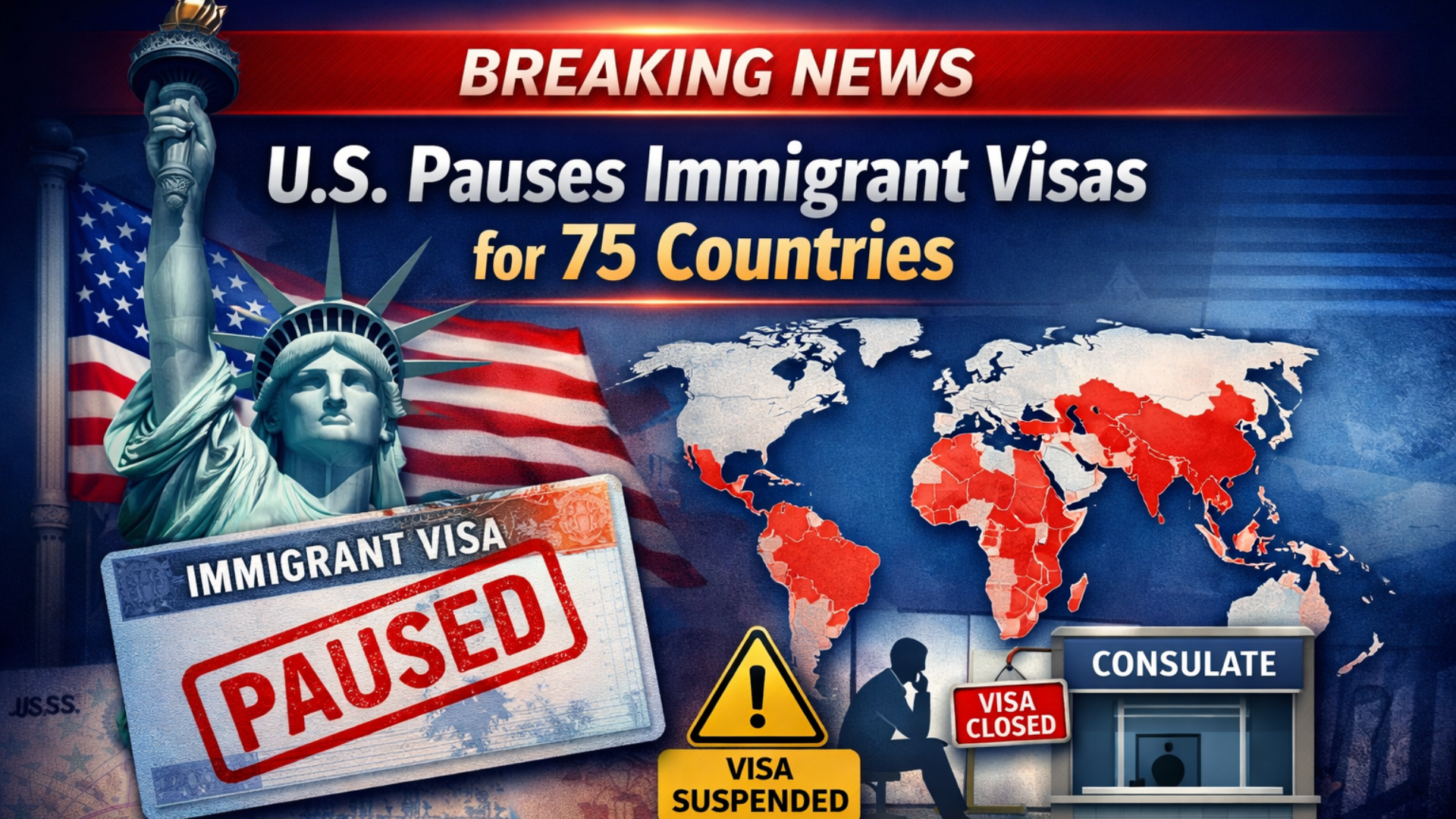

U.S. Pauses Immigrant Visa Issuance for 75 Countries. The United States has abruptly paused the issuance of immigrant visas for nationals of 75 countries, creating widespread uncertainty for applicants, employers, and global mobility teams. The decision, announced late on January 21, 2026, affects family-based and employment-based immigrant visas processed through U.S. embassies and consulates worldwide.
While visa interviews may still be scheduled, consular officers have been instructed not to issue or print immigrant visas until further notice. The pause is indefinite and tied to an internal policy review.
Why the U.S. Paused Immigrant Visa Issuance
According to an internal cable issued by the U.S. Department of State, the pause is linked to a broader security and public-charge review.
U.S. officials believe that applicants from certain countries may present a higher risk of long-term reliance on public welfare programs after entering the United States as permanent residents. Until the review is completed, immigrant visas for affected nationals will remain on hold.
The directive took effect immediately and applies to all U.S. consular posts worldwide.
Which Visas Are Affected by the Suspension
The pause applies only to immigrant visas, including:

- Family-based immigrant visas
- Employment-based green cards
- Diversity visa (DV) processing
- Other permanent residence categories handled through consulates
Visas Not Affected
The suspension does not apply to non-immigrant (temporary) visas, such as:
- H-1B work visas
- L-1 intra-company transfers
- E-2 investor visas
- B-1/B-2 visitor visas
- Student and exchange visas
Applicants for these categories may continue normal processing.
Countries Impacted by the Visa Pause
The list includes 75 mostly developing nations across every major region:
- Africa: Nigeria, Ethiopia, and others
- Asia: Afghanistan, Iran, and surrounding regions
- Americas: Brazil, Haiti, and select Caribbean states
- Europe: Russia, Belarus, and neighboring countries
The State Department has not published a full public list, but consulates have received internal guidance.
Who Is Exempt From the Pause
Not all applicants from affected countries are subject to the suspension.

Exemptions Include
- Dual nationals traveling on passports from non-listed countries
- Applicants adjusting status inside the United States
- Holders of non-immigrant visas
This means some applicants may still proceed depending on their legal pathway.
What This Means for Employers and Global Mobility Teams
For multinational companies, the pause presents an immediate planning challenge.
Impact on Employers
- Green-card pipelines may face indefinite delays
- International transfers could be postponed
- Legal and compliance costs may increase
Common Employer Strategies
- Extending H-1B or L-1 visas for current employees
- Delaying overseas transfers
- Temporarily relocating employees to third countries
- Revising hiring timelines and budgets
Corporate mobility managers are advised to audit all pending cases involving affected countries and prepare alternative immigration pathways.
Guidance for Individual Visa Applicants
For individuals, caution is essential.
Applicants Inside the United States
Foreign nationals already in the U.S. who qualify for permanent residence should consider adjustment of status through U.S. Citizenship and Immigration Services instead of leaving the country for consular processing.

Applicants Outside the United States
Those with upcoming immigrant-visa interviews should expect:
- Interview cancellations
- Delayed processing
- No visa issuance, even if approved
Applicants are advised not to resign from jobs, sell property, or make irreversible plans until clear guidance is issued.
Role of Third-Party Visa Support Platforms
Due to the lack of public clarity, many individuals and HR teams are relying on professional visa-tracking platforms for updates.
One such platform is VisaHQ, which provides:
- Real-time policy updates
- Appointment rescheduling assistance
- Centralized case tracking
- Alternative immigration strategy guidance
By consolidating information across embassies and agencies, these platforms help reduce confusion during policy disruptions.

Legal Outlook and Possible Challenges
The U.S. government has not provided a timeline for completing the policy review. Immigration attorneys expect:
- Legal challenges questioning the blanket nature of the pause
- Court cases that may take months to resolve
- Potential policy revisions rather than a full reversal
Until then, the suspension remains in place with no confirmed end date.
What Organizations Should Do Now
Global employers and institutions should take immediate action:
- Identify affected employees and applicants
- Update relocation and onboarding timelines
- Communicate transparently with staff
- Prepare contingency budgets
- Brief senior leadership on risks and alternatives
Early planning can reduce operational disruption.
Frequently Asked Questions (FAQs)
Is the immigrant visa pause permanent?
No official end date has been announced. The pause is described as temporary but indefinite.

Are tourist and work visas affected?
No. Non-immigrant visas continue to be processed normally.
Can visa interviews still be scheduled?
Yes, but visas will not be issued or printed after approval.
Does this affect adjustment of status in the U.S.?
No. Adjustment through USCIS is not impacted.
Will the list of countries change?
The State Department has not confirmed whether the list will expand or shrink.
Conclusion
The U.S. decision to pause immigrant visa issuance for nationals of 75 countries marks one of the most significant immigration disruptions in recent years. With no clear timeline for resolution, applicants and employers must adapt quickly, stay informed, and explore alternative legal pathways.
Until official guidance changes, careful planning, professional advice, and patience remain essential for navigating this evolving immigration landscape.