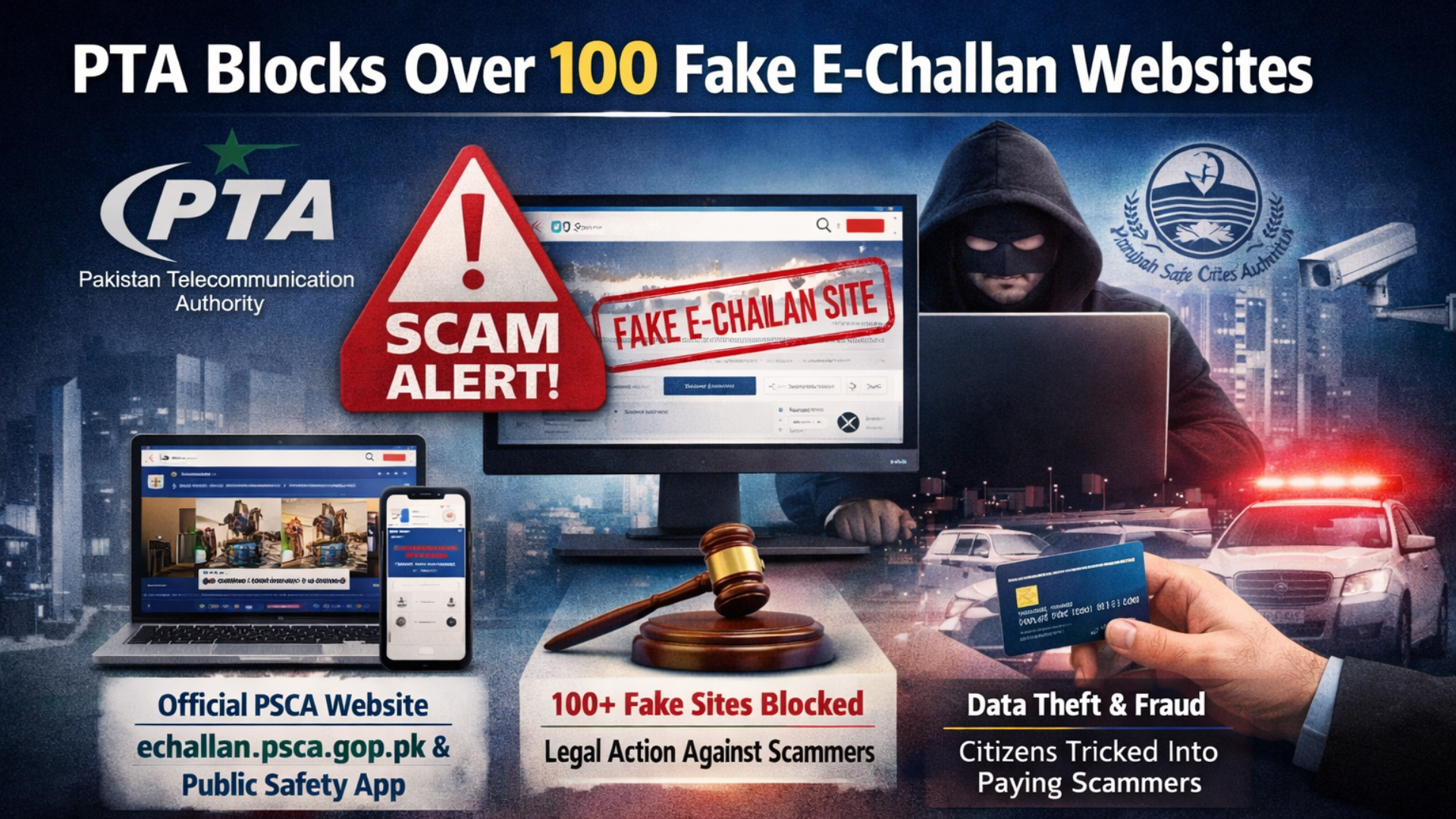

PTA Blocks More Than 100 Fake E-Challan Websites. The Pakistan Telecommunication Authority (PTA) has taken strong action against online fraud by blocking more than 100 fake and phishing e-challan websites across Pakistan. These websites were illegally collecting money from citizens by misusing the name and logo of the Punjab Safe Cities Authority (PSCA).
This move comes after a formal report submitted by PSCA, which identified several fraudulent platforms pretending to be official e-challan payment portals. The PTA acted immediately on the recommendations and shut down the illegal websites to prevent further financial losses.
Why PTA Blocked Fake E-Challan Websites
According to officials, the blocked websites were designed to mislead citizens who wanted to pay traffic fines online. These fake platforms copied the branding, layout, and language of official PSCA pages, making them appear genuine.
Once users entered their personal and banking details, the fraudsters used this information for illegal financial activities, including unauthorized transactions and data theft.
A PSCA spokesperson confirmed that these websites were deliberately created to exploit public trust in government systems.
How the E-Challan Scam Worked
Fraudsters used simple but effective methods to trap people:

- Fake websites appeared in Google search results
- PSCA logos and colors were copied
- Users were asked to enter CNIC, vehicle number, and card details
- Payments were redirected to private accounts
Many citizens believed they were paying real traffic fines, but their money never reached any government department.
PSCA Issues Public Warning
The Punjab Safe Cities Authority strongly warned citizens not to make payments on:
- Unverified websites
- Suspicious links shared via SMS or WhatsApp
- Unofficial social media pages
The spokesperson advised everyone to double-check the website address before entering any personal or payment information.
Official Platforms for Safe E-Challan Payments
To avoid fraud, PSCA clearly stated that citizens should use only official and verified platforms for e-challan payments.
Approved Payment Methods
- Official Website: echallan.psca.gop.pk
- Public Safety App (available on official app stores)
Any other website claiming to collect PSCA e-challan payments should be treated as fake and unsafe.

Legal Action Against Fake Website Operators
PSCA also confirmed that legal action has been expanded against individuals and groups involved in creating fake Safe City websites.
Authorities have adopted a zero-tolerance policy to:
- Protect citizens’ finances
- Prevent identity theft
- Stop misuse of government logos
- Maintain trust in digital public services
Investigations are ongoing, and more websites may be blocked in the coming days.
Role of PTA in Fighting Online Scams
The Pakistan Telecommunication Authority plays a key role in monitoring and regulating online content in Pakistan. In this case, PTA:
- Verified the PSCA complaint
- Identified phishing domains
- Blocked access nationwide
- Helped prevent further financial damage
This action highlights PTA’s growing focus on cybersecurity and consumer protection.
Why Fake Government Websites Are Increasing
Experts say fake government websites are increasing because:
- More services are now online
- Citizens prefer digital payments
- Scammers exploit lack of awareness
- Search ads and fake links are cheap
Traffic fines and utility payments are common targets because people want quick online solutions.
How to Identify a Fake E-Challan Website
Here are some simple signs that a website may be fake:
- Website URL does not end with .gov.pk
- Spelling or grammar mistakes
- Urgent payment warnings
- Requests for unnecessary personal details
- No official contact information
If anything looks suspicious, do not proceed with payment.
What to Do If You Paid on a Fake Website
If you believe you made a payment on a fake e-challan website:

- Contact your bank immediately
- Block your debit or credit card
- Report the website to PTA
- Inform PSCA through official channels
- Change your online banking passwords
Quick action can reduce financial loss.
Public Awareness Is Key
Authorities stressed that blocking websites alone is not enough. Citizens must also stay alert and informed.
PSCA urged people to:
- Share awareness with friends and family
- Avoid clicking random payment links
- Use official apps and websites only
Digital safety starts with public awareness.
Government’s Message to Citizens
The government reassured citizens that:

- Official platforms are secure
- Action is being taken against scammers
- Digital services will continue to improve
Officials emphasized that public trust in online systems is a top priority.
FAQs – PTA Fake E-Challan Websites
Why did PTA block these websites?
They were phishing platforms stealing money by pretending to be PSCA e-challan sites.
How many fake websites were blocked?
More than 100 websites have been blocked so far.
What is the official PSCA e-challan website?
Only echallan.psca.gop.pk is official.
Is the Public Safety App safe?
Yes. It is an approved and verified platform for e-challan services.
Will more fake sites be blocked?
Yes. Authorities confirmed ongoing monitoring and action.
Conclusion
The blocking of over 100 fake e-challan websites by the Pakistan Telecommunication Authority, following recommendations from the Punjab Safe Cities Authority, is a major step toward protecting citizens from online fraud.