
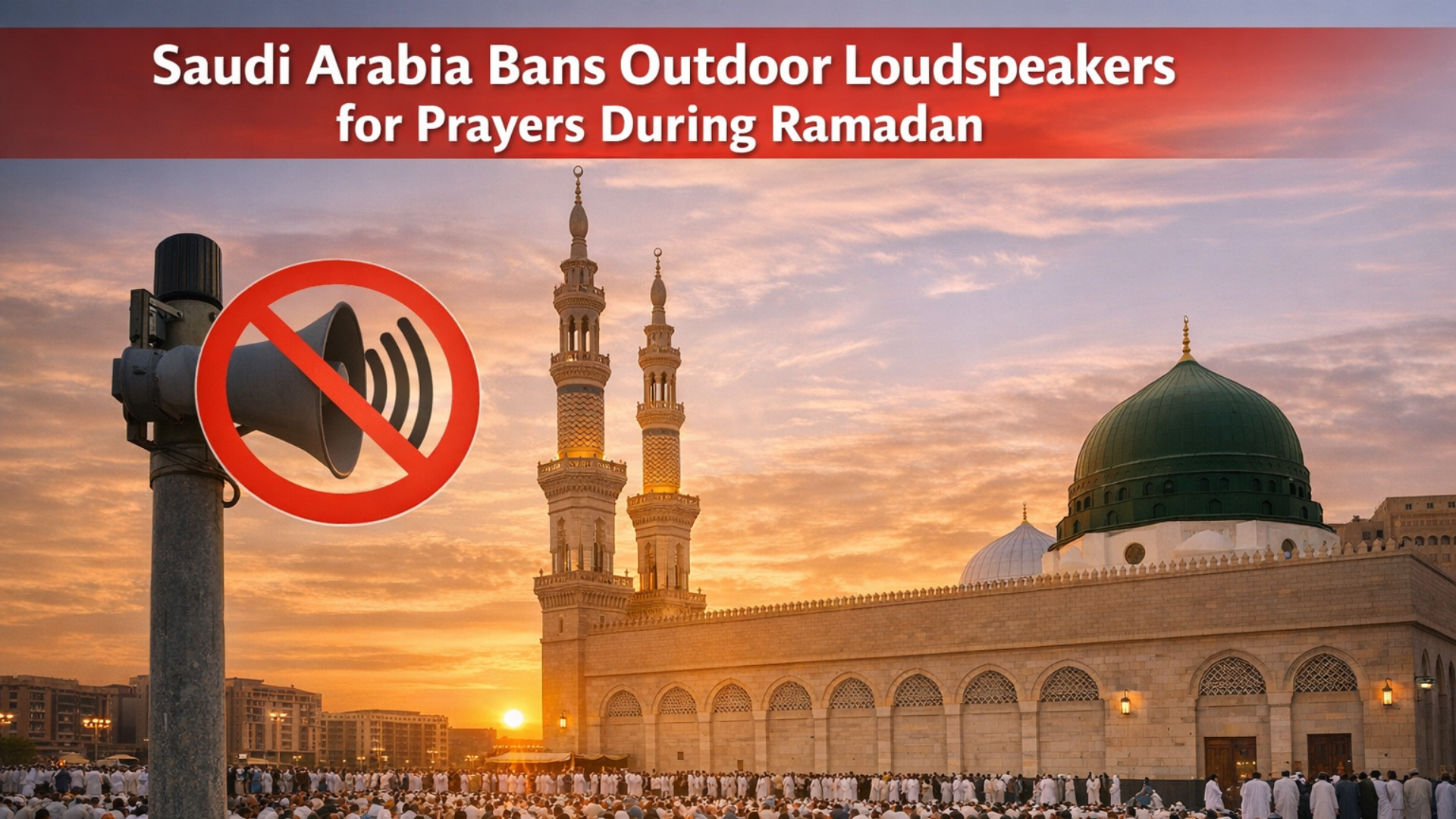

Bans Outdoor Loudspeakers. Saudi Arabia has once again confirmed its policy banning the use of outdoor loudspeakers for prayers during the holy month of Ramadan, except for the adhan and iqama. The decision aims to preserve calm in residential areas while maintaining the sanctity and discipline of worship inside mosques.
The clarification came from Sheikh Abdullatif Al Sheikh, the Minister of Islamic Affairs, Dawah, and Guidance, following the release of a new circular ahead of Ramadan preparations.
What the Loudspeaker Ban Means for Mosques
Under the updated Ramadan guidelines, mosques across the Kingdom are not allowed to broadcast prayers, supplications, or sermons through external loudspeakers. The only exceptions remain:
- Adhan (the call to prayer)
- Iqama (the announcement signaling the start of congregational prayer)
All other prayers, including Taraweeh and Qiyam-ul-Lail, must be conducted using indoor sound systems only.

According to the ministry, this rule is not new but a reaffirmation to ensure consistency during Ramadan, when prayer activity significantly increases.
Official Ramadan Guidelines Issued by the Ministry
The Ministry of Islamic Affairs, Dawah and Guidance issued a formal circular outlining mosque readiness and conduct during Ramadan. The instructions focus on organization, discipline, and community consideration.
Key Instructions Include:
- Strict adherence to official prayer times based on the Umm Al-Qura calendar
- Proper and approved time gaps between adhan and iqama
- No external broadcasting of prayers beyond permitted calls
- Ensuring sermons and recitations remain within mosque premises
The ministry emphasized that following these guidelines is mandatory for all mosques in the Kingdom.

Rules for Iftar Arrangements in Mosques
The circular also addressed the organization of iftar meals, which are common during Ramadan.
Mosques are instructed to:
- Serve iftar only in designated courtyard areas
- Avoid blocking entrances, prayer halls, or public pathways
- Ensure proper cleanliness before and after meals
- Coordinate with local authorities where necessary
The aim is to allow charitable activities to continue without causing congestion or inconvenience.

Focus on Cleanliness and Safety
Mosque caretakers and administrators have been directed to prioritize:
- Daily cleaning and sanitization of prayer areas
- Proper ventilation and lighting
- Safe electrical and sound systems
- Special care for women’s prayer sections, including privacy, hygiene, and accessibility
The ministry stressed that a clean and safe mosque environment is essential for worshippers, especially during the high-attendance period of Ramadan.
Why Saudi Arabia Enforces the Loudspeaker Restriction
The Ministry explained that the loudspeaker policy helps:

- Maintain peace in surrounding residential neighborhoods
- Prevent sound overlap between nearby mosques
- Reduce disturbance to the elderly, sick, and children
- Promote focus and tranquility during worship
Officials highlighted that the decision balances religious observance with public comfort, reflecting Saudi Arabia’s broader approach to mosque management.
Public and Community Impact
While some worshippers prefer hearing prayers broadcast outdoors, authorities note that modern mosque infrastructure already provides clear and sufficient indoor audio systems.
Community feedback over the years has shown that limiting external noise helps create a more respectful and spiritually focused Ramadan environment for everyone.

Ministry’s Message for Ramadan 2026
The Ministry of Islamic Affairs stated that these measures are designed to:
- Enhance spiritual discipline
- Encourage organized worship
- Uphold public order
- Respect neighboring communities
By following these guidelines, mosques can ensure Ramadan remains a time of reflection, unity, and calm.
Conclusion
Saudi Arabia’s reaffirmed ban on outdoor loudspeakers for prayers during Ramadan highlights the Kingdom’s commitment to organized worship and community harmony. By limiting external sound to the adhan and iqama, regulating iftar arrangements, and enforcing cleanliness standards, authorities aim to create a peaceful and spiritually enriching Ramadan for all.